
By Graham Pinn
In a bid to stabilise electricity supply, the NSW Labor Government is taking batteries to the next level. Incentives (aka subsidies) have increased from $800 to $1500 for homes with (subsidised) solar, to install new batteries connected to the grid. Now impressively re-labelled Virtual Power Plants (VPP), this will allow energy companies to access domestic supply to “future proof” the grid.
The problem of intermittent domestic electricity generation at night has been addressed by home battery storage, currently a significant cost of around $10,000 per house, with, in addition, another $1500 for an inverter, to convert AC to DC current. In the event of power failure, a typical battery would power the home for 36 hours. There is a limited life expectancy to these batteries, typically 5 to 15 years and, whilst this may be sufficient for those who can afford it, it adds cost to those homes or businesses who currently depend on power stations for increasingly expensive electricity supply.
Currently, around 4 million homes have solar; the Clean Energy Council says 200,000 have batteries, and SunWiz estimates 15% of those have VPP’s. By my estimate that is 30,000 VPP, along way short of any meaningful backup. Control of batteries would mean supply to the grid only when needed, reducing the wide fluctuation in wholesale electricity prices, but also reducing return to battery owners.
Another concern relates to fire risk; these lithium batteries have caused fires in EV and home batteries; several transport ships, carrying EV, have been engulfed in fire and sunk, the latest in June, 2025. Some makes of home storage batteries have been recalled with safety concerns.
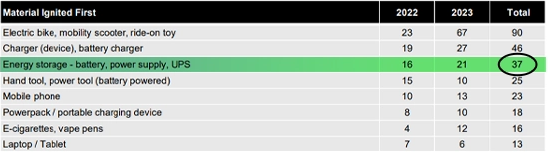
Statistics from NSW, from 2024, show a battery fire occurring somewhere in the state every day, and increasing with use. Whilst occurring primarily with cheap scooter batteries, around 40 a year are caused by home storage batteries, and some makes have been withdrawn. The problem with any lithium battery is difficulty with containment, often resulting in major home damage.
The new storage batteries, weigh anything between 300 and 600 Kg. Wet batteries, used for boats and cars, are mostly recycled; lithium batteries in devices (in the US around 3 billion a year) end in landfill, where they eventually rupture and leak cadmium, nickel, and aluminium; despite increasingly short supply of these currently as little as 10% is recycled.
By 2030, the mineral Council of Australia has estimated 50 new lithium mines, 60 new nickel mines and 17 new cobalt mines will be needed for future world-demand battery storage. Gaining approval for the necessary new mines is fraught with environmental and heritage problems, new investment is being discouraged by increasing sovereign risk.
By 2026, it is estimated that 130,000 tonnes of batteries may have accumulated, by 2030 ten million tons of batteries will become garbage, and need replacing. By 2050, solar panels will double the tonnage of plastic waste.
The recent Queensland project was to build 2 more hydro batteries and reconfigure the grid, these projects have been cancelled by the new Coalition Government; bizarrely, has become necessary to subsidise coal as the backup intermittent supply. With the anticipated closure of coal plants, maintenance has been run down and increasing failures are occurring.; the latest at Yallourn, which supplies 20% of Victoria’s electricity, is putting the state’s power grid at risk – and winter has only just begun!
The increased electricity cost of manufacturing results in jobs lost to overseas, to countries using cheaper coal electricity generation, with no benefit to world CO2 reduction, in fact increasing. Batteries decline with age, by about 30% at 10 years, meaning regular replacement and disposal problems, the number needed to provide security of supply is astronomical.
Victoria has plans for a massive battery installation, in a Melbourne suburb, initially stated to run 1.1 million homes, it will power 200,000 homes for 4 hours. As coal shuts down and wind fails to develop, there are problems unless gas is utilised, shortages there are predicted from late 2025.
South Australia, relying on renewables and imported energy, is most at risk of blackouts. Its Tesla big battery, costing $90 million, has storage of 100 MW, enough to power the state for an hour. It is common for wind and solar “droughts” to last for several days; it has a back-up inter-state connector to provide power from more reliable sources, assuming they still exist. A similar battery to last for one and a half days, would require 7.2 TWH of power, 72,000 similar batteries, cost $6.5 trillion – nuclear is cheaper!!!
New South Wales is building a big 850MW battery at the decommissioned Munmorah coal generator; the US company, supplying Chinese equipment to this and two Queensland projects, is in danger of folding with the new Trump regulations. In the US the picture is even less certain, with retraction of the Democrats solar and battery subsidies; already in financial trouble, Sunnova, one of the US largest solar roof-top companies has now collapsed.
The latest “pie-in-the-sky” scheme proposed by Energy Minister Bowen, the grandiosely named the National Energy Performance Strategy, at the bargain price of $15 billion, it will apparently save $18 billion by 2050. It merely requires householders to spend $120 billion on solar and $240 billion on batteries to support the grid; this does not sound like cheap electricity. Whilst storage of 6GW is needed annually, to reach the projected 2030 target, only 2.2 GW was added in 2023, and approval for new projects was 2.4GW turbines, without storage will achieve no energy stability.
Without battery storage, to last at least 48 hours, the backup generation will have to supply the full network for that time, in effect meaning we still need full non-renewable supply – so why duplicate? The latest battery, at Eraring Coal station, is described by Origin energy as having the largest dispatchable capacity in the Southern Hemisphere, 700 MW; it sounds impressive, but would work for only 4 hours before depletion. This is the reality of batteries, insufficient to cover periods of prolonged renewable energy droughts, which is why an alternative fossil-fuelled backup gas network remains important.
The latest VPP plan, would require massive numbers of home storage batteries to maintain the grid. In addition, to fulfil Chris Bowen’s grand scheme, additional solar farms would require over 120,000 sq km of land to be utilised, (half the size of Victoria) with loss of environment and habitat, also removal of some of the 4% of arable land; installation of 22,000 new panels every day is needed. It also requires nearly 5000 sq km for wind farms, at a rate of 40 turbines a month, in addition to offshore, all needing replacing every 15-20 years, and in addition, 10,000 km of transmission lines. The current speed of rollout is one tenth of that needed to reach the 2030 target.
As a cold winter is upon us, and backup fossil fuelled generation fails to be maintained, we have a future where more and more electricity will be needed for our EV, AI and green-energy “superpower status.” Maybe, we should do the unthinkable, and follow the rest of the world to the nuclear age.
Dr. Graham Pinn is a retired consultant physician. His career included time in the military, working for overseas aid, and in the public hospital system in Australia. He has lived and worked in 10 different countries, in Europe, the Middle East, Indian and Pacific Oceans, experiencing different cultures and life expectations.
Why do our dopey politicians fall for this voodoo. Where are our fearless newshounds. Though the ABC is useless and luckily the internet, if you know how to look is not. So thank you for this, which by the way I got of a German website. But I don’t get why nobody cares and repeats some witchcraft mantra. Or was I incarnated on the wrong planet.