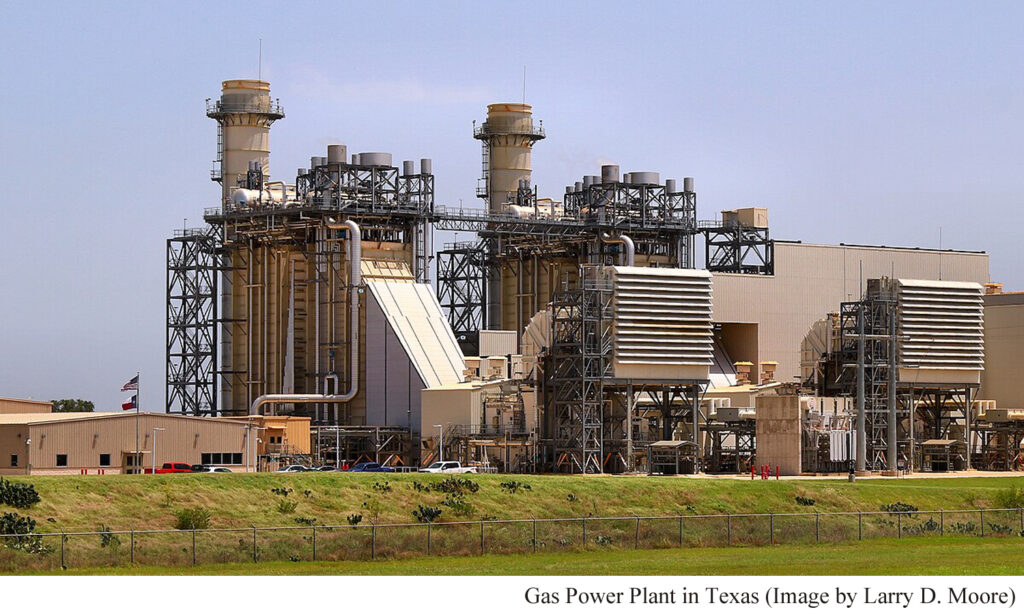
A boom in artificial intelligence (AI) investments now drives the United States electricity market. New data centers and upgrades to existing data centers are creating a vast demand for power. But big AI firms are choosing natural gas plants to provide electrical power, not renewable energy.
Bjørn Lomborg is a Danish climate scientist, author, and the President of the think tank Copenhagen Consensus Center. He is the former director of the Danish government’s Environmental Assessment Institute in Copenhagen.
His views on the issue of heat vs cold in relation to deaths caused by slightly warmer global temperatures are encapsulated in the image above.
From New York to California, state renewable electrical power dreams are collapsing. Power demands soar, while the federal government cuts funding and support for wind, solar, and grid batteries. Renewables cannot provide enough power to support the artificial intelligence revolution. The Net Zero electricity transition is failing in the United States.
This week the U.S. experienced the first major heat wave of 2025. Over 160 million people in the Midwest, the South, and the East Coast experienced temperatures approaching 100oF. Many in the media claim that the soaring temperatures are due to human-caused global warming. But a look at history shows that such high temperatures have been experienced many times in the past.
Extreme heat warnings were issued in Baltimore, Boston, New York City, Philadelphia, and Washington D.C. The Washington Monument was closed due to the heat. Dozens of daily high temperature records were broken. Heat indexes, which combine temperatures and the effects of humidity, exceeded 100 in Chicago, Pittsburgh, Philadelphia, and other locations.
Many media outlets reported that humans are responsible for the current hot weather. CNNreported that “heat waves are getting more dangerous with climate change” and that the current heat wave “bears the hallmarks of human-caused global warming.” NPRconcluded that “human-caused climate change has made this heat wave three times more likely” due to emissions from “burning of coal, oil and gas.” Timestated that heat waves now occur “three times as often” in the U.S. as they did in the 1960s. But historical records do not support the media alarm about heat waves.
The National Oceanic and Atmospheric Administration (NOAA) tracks state record high temperatures and the date when they occur. The data shows that 36 of the 50 state record highs were set more than five decades ago. Twenty-three state record high temperatures occurred in the decade of the 1930s, when annual human CO2 emissions were less than one-eighth of today’s emissions. Despite endless headlines about heat waves, only 6 state high temperature records have occurred since the year 2000.